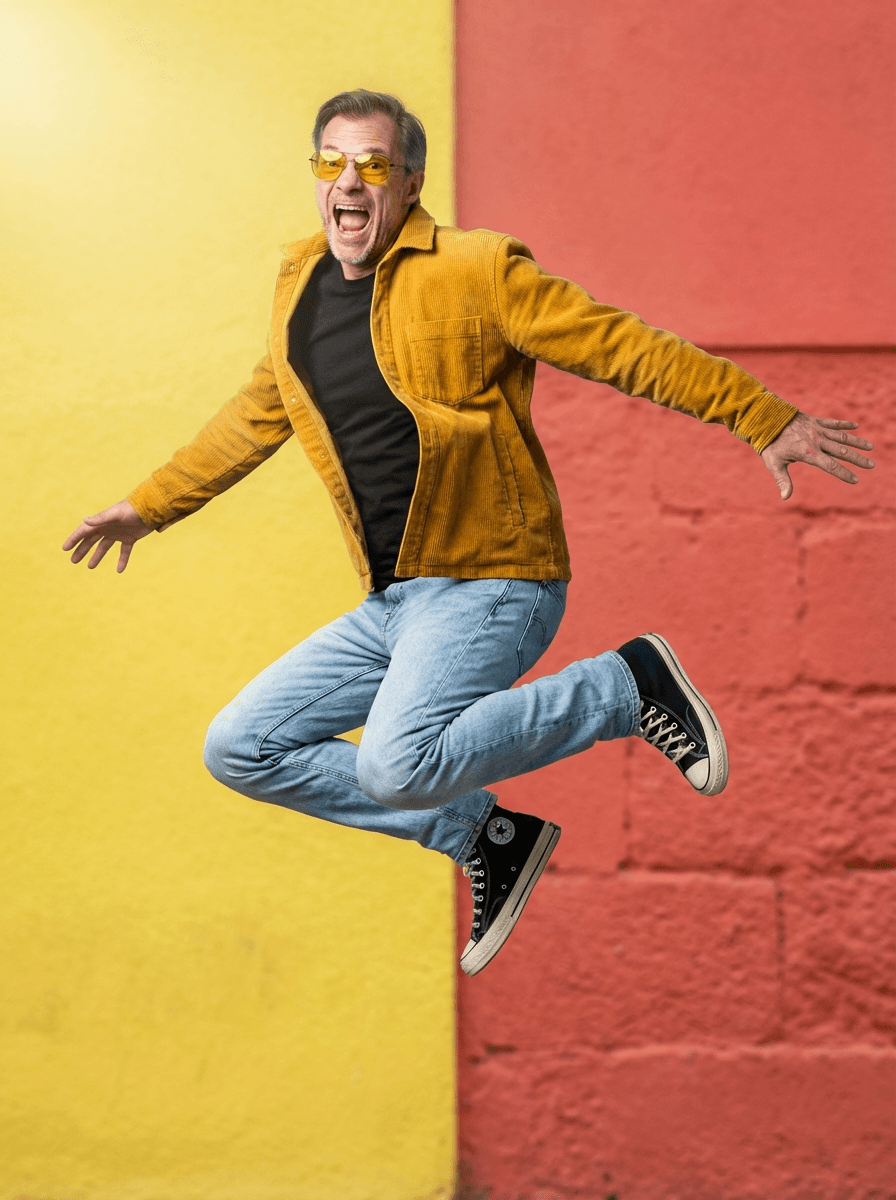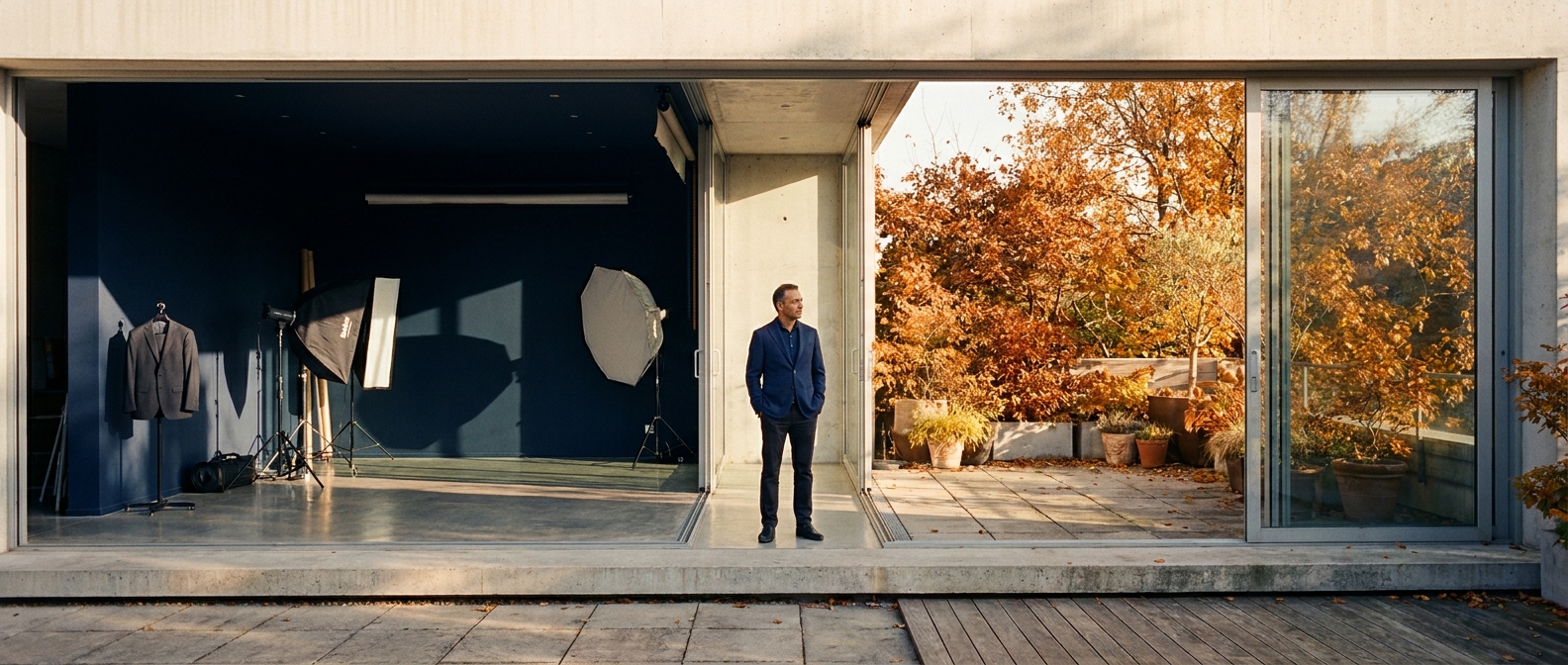
Indoor studio headshots read as formal and controlled: even light, a clean background, and a corporate register. Outdoor headshots read as warm and approachable: natural light, a soft-blurred backdrop, and a more casual register. Neither is more professional; they signal different things. Law, finance, and executive roles default indoor. Real estate, coaching, creative work, and founder profiles often win with outdoor.
A photographer session typically costs $150 to $400. Portreya Starter is $4.99 for 2 photos from one clear selfie in about 60 seconds per image, one-time, with a money-back guarantee.
This guide is for individuals choosing a setting. It is not a team rollout playbook. If you manage photos for a whole company, start with TeamShotsPro instead.
For lighting, clothes, and pose after you pick a setting, see professional headshot tips.
How each look reads
An indoor studio headshot says deliberate: you booked the setting, the light is even, nothing is accidental. That control is why formal fields default to it, and why it holds up in print and directories. An outdoor headshot says approachable: daylight flatters skin tones, the blurred background adds depth, and the whole frame feels less staged. That warmth is why client-facing fields, real estate above all, lean outdoor. The choice is register, not quality; a sharp outdoor portrait beats a sloppy studio shot everywhere.
The practical trade-offs
Outdoor light is better and free but uncontrolled: overcast days are perfect, noon sun is brutal, golden hour flatters but books out fast with photographers. Studio light is consistent but costs setup or session fees, and a bad studio shot looks worse than a bad outdoor one because there is nothing to blame. Backgrounds cut the other way: studios never surprise you; outdoor locations add interest but can date the photo (seasons, recognizable places) and distract at thumbnail size, where most headshots live. Crop tight either way; the backgrounds guide shows which backdrops survive small sizes.